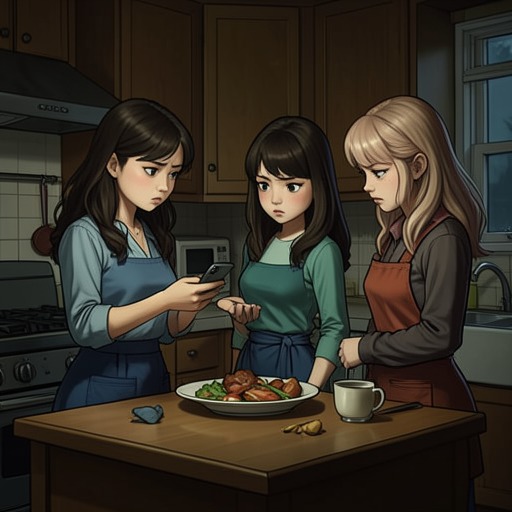
Bea and Irene’s Sisterly Relationship
Gente que viene y ¡Bah!Bea and Irene’s Sisterly Relationship is marked by an enduring imbalance of roles: Irene is the elder sister who takes charge, while Bea has long experienced her as a forceful presence almost as formative as their mother. Bea’s return to the family home reveals the care beneath Irene’s intrusiveness, but the sisters’ closeness is tested when Irene’s controversial support for the San Esteban Biomass Plant becomes entangled with Bea’s upheaval and the family’s public exposure. Their story moves from familiar bluntness and practical affection to political strain, perceived responsibility, and a reconciliation made possible by grief.
A Sister Who Takes Charge
Irene is thirty-nine, a practical woman of action who does not merely identify problems but moves to solve them. She is described as organizing, bossy, and accustomed to leading; at home, she has long had the decisive voice. Bea reflects that Irene sometimes seemed to have raised her in place of their mother. Her leadership is not a posture she adopts only in public: it is the default form her attention takes, extending into other people’s difficulties even when they do not need her intervention.
That habit is immediately visible when Bea arrives with a large suitcase. Irene treats the luggage as evidence that something has gone wrong, asking whether Bea’s former fiancé has kept their apartment or thrown her out and proposing legal action if he has. Bea objects that Irene is leaping to conclusions, but Irene does not accept her reassurance. When Bea tries to limit the conversation to their mother’s birthday and says she and her fiancé have merely taken time apart, Irene rejects the euphemism and teases her for sounding like someone who has studied in Madrid. The exchange is sharp, but its pressure comes from concern: Irene wants Bea to say plainly what has happened and to make a plan.
Bea initially resists that scrutiny. When Irene asks whether she will return to Madrid on Monday, Bea hears the question as a possible wish to send her away. Their mother reassures her that she can stay as long as she wants. Later, when Bea cannot say how long she intends to remain, Irene embraces her and tells her she is glad she has stayed. The welcome is affectionate and unambiguous, even as Irene immediately looks for a practical way to put Bea to work helping with her nephew.
Care in the Form of Action
Irene’s directness does not prevent tenderness; it determines how tenderness is expressed. After Bea has been humiliated and hurt in an encounter with a man in a pink Mercedes, she returns home in pain and tries to sleep. Unable to settle, she takes her duvet to the roof. Irene appears with two cans of beer, sits beside her, and shares the blanket. She gives Bea a moment to look at the moon, but soon asks what her plans are and whether she intends to drift through life like a heroine in a romantic novel. Bea would rather keep talking about the moon; Irene, true to form, turns companionship toward practical questions.
The scene captures the sisters’ characteristic rhythm without making Irene’s care sentimental or Bea’s resistance final. Irene can bring comfort and demand an answer in the same encounter. She also supplies Bea with a rapid account of the town’s affairs, explaining that San Esteban is divided between supporters and opponents of the new factory beside the Andrada Family Sawmill. Bea arrives without even knowing the controversy is underway; Irene assumes local news will have reached her and gives her a compressed briefing before returning the conversation to Bea’s plans.
Their reunion therefore restores Bea to family life while also drawing her into the problems Irene considers urgent. Bea is still trying to understand her own disrupted future when Irene describes the biomass project and its political stakes. The homecoming does not offer a separation between private refuge and public events: in Irene’s company, the two quickly become intertwined.
Irene’s Politics and the Sisters’ Divided Stakes
Irene presents the biomass project as a route to progress. She argues that the plant will provide clean, inexpensive energy, use otherwise unusable wood, create jobs, and potentially generate enough electricity for fifty thousand people. In her account, the project could reduce reliance on fossil fuels and make the region a pioneer in Spain. She says she is committed to progress rather than to saving every tree, while insisting that forests and energy can coexist. Though she says she is not personally involved in the factory, she acknowledges that the municipal government supports it and is working closely with the project.
That conviction has already made Irene a target. She tells Bea that people have painted insults against her and accused a left-wing mayor of betraying Cantabria by not defending every tree. Irene interprets the opposition as resistance to development and dismisses some environmental objections as attachment to useless undergrowth. Her certainty is part of her strength as a political leader, but it also narrows the space in which she can hear opponents. She speaks as if the benefits are clear and the objections misguided, while the town is becoming increasingly divided over the plant.
The controversy reaches Bea through a newspaper article that Pacheco shows her. It alleges that two landowners were threatened with expropriation if they did not agree to sell their trees to supply the biomass factory. Pacheco says Irene’s ex-husband is giving him information. The revelation changes the terms of the issue Bea had heard from Irene: the dispute is no longer only about competing views of clean energy and forest protection, but also about the means used to secure land and supply. The evidence does not show the sisters resolving that political disagreement together; instead, it places Bea close to the controversy as it turns into a wider attack on Irene.
Public Crisis and Private Responsibility
When Irene is interviewed on television, the journalist first challenges the claimed advantages of biomass energy, raising questions about transport emissions, ash and other waste, carbon dioxide, the scale of forest required, public subsidies, and whether promised jobs materialize. Irene has answers, but the presenter overwhelms her with figures and examples. The interview then turns from environmental and economic claims to the political agreements behind the project. Irene is left struggling to defend both the plant and the decisions that enabled it.
The decisive blow comes when the presenter produces a copy of an agreement changing pollution-control parameters without Irene’s knowledge. The journalist frames the plant as pursuing profit at the expense of neighbors’ health and accuses Irene’s left-wing government of promoting it. Irene, caught off guard, responds angrily and denies the charge. The scene shows how a project Irene had described to Bea as a practical route toward energy independence has become a public test of her judgment and trustworthiness. It also makes the sisters’ family connection part of the atmosphere surrounding the crisis: Bea is present in a town where private lives and political events are increasingly difficult to keep apart.
The opposition eventually announces a motion of no confidence. Irene refuses to resign, arguing that pursuing an ambitious energy goal is not itself an admission of wrongdoing. She wants to face the vote rather than appear to slip away through the back door. The opposition has the numbers: five councilors from Irene’s own party vote with it, and she loses the mayoralty by a decisive majority. The defeat humiliates her and confirms the fear that the people she had fought for have turned against her.
Bea does not believe she can look Irene in the face. Although Irene does not directly blame her, Bea feels that her presence has aggravated her sister’s distress. She concludes that she has brought her own chaos into the lives of the family members who sheltered her and decides that the sensible course is to return to Madrid, find work and an apartment, and start over. Her decision is shaped not by a stated accusation from Irene but by Bea’s own sense of responsibility and the painful sight of Irene feeling like a failure. The sisters’ relationship is thus strained by consequences that neither simple affection nor a single conversation can undo.
Shared Grief and Reconciliation
The family’s later reading of Ángela’s notes brings the sisters back together in a different register. Bea asks that Débora be called for the last note, and Débora arrives as the family gathers around the words. Ángela’s message asks Bea and her sisters to make peace with one another, but suggests that their mother’s death may already have achieved what a direct instruction could not. Bea reads that death can make the remaining problems seem ridiculous. The three sisters look at one another, and no explanation is needed: they recognize the truth in their mother’s words together.
This moment does not erase the political defeat, Bea’s guilt, or the sisters’ earlier frictions. Instead, it places those conflicts beside the loss of the person whose presence held the family together. Irene’s habitual role as the one who organizes, directs, and intervenes gives way to a shared silence in which none of the sisters has to lead. Their bond is shown not as freedom from conflict but as a relationship capable of surviving it—and of finding, in a family gathered around Ángela’s words, a way back to one another.